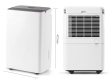

Choosing the right home dehumidifier can significantly improve your indoor air quality and comfort by removing excess moisture. A home dehumidifier helps prevent mold growth, reduce allergens, and protect your home from moisture damage. This guide will walk you through the key factors to consider when selecting a home dehumidifier, ensuring you find the perfect fit for your needs.
Table of Contents
ToggleUnderstanding the Need for a Home Dehumidifier
High humidity levels can lead to a host of problems, including mold and mildew growth, musty odors, and even structural damage to your home. Dehumidifiers work by drawing moisture from the air, thereby creating a healthier and more comfortable living environment. Recognizing the signs of excess humidity, such as condensation on windows or a persistent damp smell, is the first step in determining if you need a home dehumidifier.
Types of Home Dehumidifiers: Which One is Right for You?
Several types of home dehumidifiers are available, each with its own advantages and disadvantages. Knowing the differences can help you make an informed decision:
Compressor Dehumidifiers
These are the most common type, using a refrigeration system to cool the air and condense water vapor. They are energy-efficient and effective in warmer temperatures but may be less efficient in cold environments.
- Pros: Generally more affordable, energy-efficient in warmer temperatures.
- Cons: Can be noisy, less effective in cold conditions.
Desiccant Dehumidifiers
These models use a desiccant material to absorb moisture. They are often quieter and more effective in colder temperatures.
- Pros: Quieter operation, effective in cold environments.
- Cons: Tend to be more expensive, may use more energy.
Whole-House Dehumidifiers
These are integrated into your HVAC system and are designed to handle larger areas.
- Pros: Suitable for entire homes, efficient for large spaces.
- Cons: More expensive to install, requires professional installation.
Key Features to Consider When Buying a Home Dehumidifier
Several key features will influence your choice of a home dehumidifier.
Capacity
Capacity, measured in pints per day, is a crucial factor. It indicates how much water the dehumidifier can remove in 24 hours. The right capacity depends on the size of your space and the level of humidity. For example, a damp basement might require a higher-capacity unit than a small bedroom.
Coverage Area
Consider the square footage the dehumidifier is designed to cover. Ensure the unit’s coverage area matches the size of the room or space you intend to dehumidify.
Energy Efficiency
Look for the Energy Star certification to ensure the dehumidifier operates efficiently. Energy-efficient models save money on electricity bills and reduce environmental impact.
Noise Level
If you plan to use the dehumidifier in a bedroom or living area, noise level is an important consideration. Look for models with quiet operation, especially if you are sensitive to noise.
Drainage Options
Consider the drainage options. Some dehumidifiers have a manual water tank that needs to be emptied regularly. Others offer continuous drainage via a hose, which is more convenient.
Additional Features
Some models offer smart features such as humidity sensors, timers, and Wi-Fi connectivity, adding convenience and control.
Sizing Your Home Dehumidifier
Proper sizing is crucial for optimal performance. The size of your space and the level of humidity will determine the capacity you need. Use the following guidelines:
- Small Spaces (up to 500 sq ft): A 20-30 pint dehumidifier.
- Medium Spaces (500-1000 sq ft): A 30-50 pint dehumidifier.
- Large Spaces (over 1000 sq ft): A 50-70 pint dehumidifier.
For extremely humid environments, you might need a unit with a higher capacity.
Recommended Home Dehumidifier Models
Here are some of the top-rated home dehumidifiers based on performance, features, and user reviews:
- hOmeLabs HME020031N: Known for quiet operation and a good warranty, a solid choice for general use.
- GoveeLife H7151: Offers fast moisture removal and a large water tank, providing excellent value.
- GE Appliances 35 Pint Dehumidifier: Features Smart Dry technology for efficient moisture removal.
- HomeLabs 22 Pint Dehumidifier: Ideal for small spaces, easy to set up, and operates quietly.
Internal Link: [For more information on energy-efficient appliances, check out our guide on how to choose the best air purifier](Related internal page).
External Link: For more details on Energy Star certification, visit the Energy Star website.
Maintaining Your Home Dehumidifier
Regular maintenance is essential to ensure your dehumidifier operates efficiently and lasts longer. This includes:
- Cleaning the filter: Clean the filter regularly, typically every two to four weeks, depending on usage.
- Emptying the water tank: Empty the water tank regularly to prevent overflow and mold growth.
- Cleaning the coils: Clean the coils periodically to maintain efficiency.
- Storing the dehumidifier properly: Store the dehumidifier properly when not in use.
Conclusion: Making the Right Choice for Your Home
Choosing the best home dehumidifier involves considering your specific needs, the size of your space, and the features that are most important to you. By understanding the different types of dehumidifiers, key features, and maintenance requirements, you can make an informed decision and create a more comfortable and healthy living environment. Remember to prioritize capacity, energy efficiency, and noise level to ensure you get the best performance and value from your home dehumidifier.

- The Complete Guide To Home Dehumidifier - February 20, 2026
- Top 10 Dehumidifier Manufacturers In Italy - October 22, 2025
- Top 10 Dehumidifier Manufacturers In France - October 22, 2025